
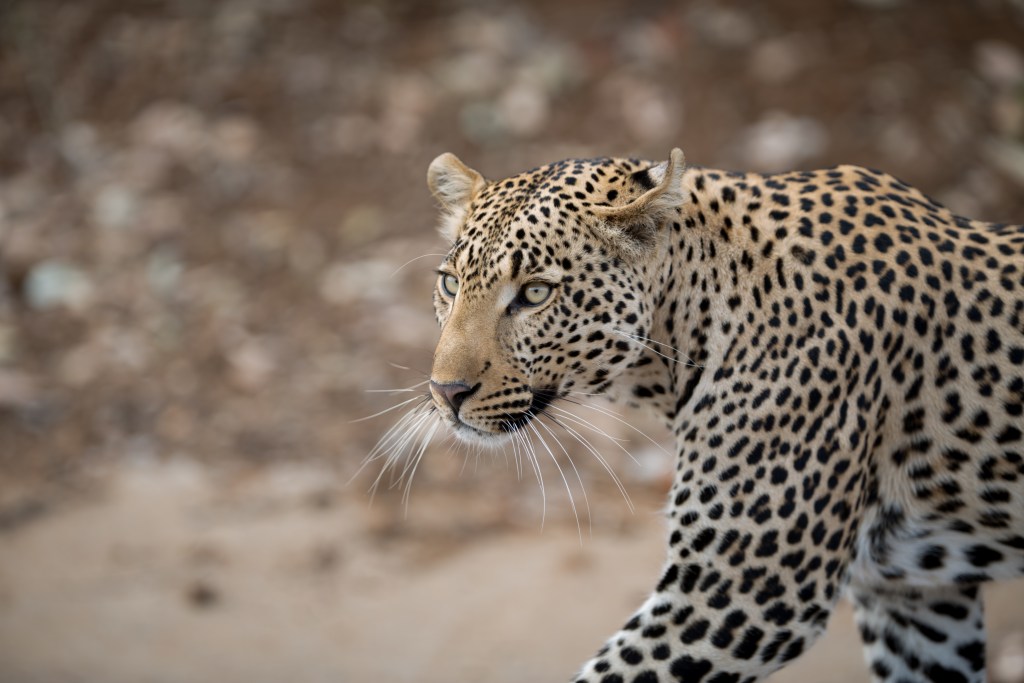

The Arabian Leopard (Panthera pardus nimr) is among the rarest big cats on Earth, clinging to survival in the rugged mountains of the Arabian Peninsula. Once common across the region, today fewer than 200 remain in the wild. Its story is not only one of decline, but of warning: a reflection of how human expansion, if unchecked, can push even the most resilient creatures to the edge of extinction.
The threats facing the Arabian Leopard are many and deeply intertwined. Expanding villages and roads fragment its habitat, while overgrazing by domestic livestock strips away the vegetation that sustains the leopard’s prey. Poaching remains a devastating reality — some leopards are hunted for their skins, while others are killed by herders seeking to protect their goats and sheep. Meanwhile, the populations of natural prey such as gazelles and hares continue to dwindle, leaving these predators with little food. Each of these pressures alone would be serious; together, they form a crisis that imperils the leopard’s very existence.
And yet, the disappearance of this animal would not only be a loss for wildlife. The Arabian Leopard is a keystone predator, shaping the balance of its ecosystem. By keeping herbivore numbers in check, it protects vegetation, prevents overgrazing, and ensures that other species have the chance to thrive. Without it, the delicate web of life in these arid lands would unravel, leaving behind degraded landscapes less capable of sustaining humans as well as animals.
Beyond ecology, the leopard embodies something deeper: the cultural spirit and natural heritage of the Middle East. For centuries, it has stood as a symbol of resilience, independence, and the wild beauty of the desert mountains. To lose it would mean erasing not only a species but a piece of human identity tied to the land. Protecting the Arabian Leopard is therefore about more than conservation; it is about defending the roots of cultural memory and ensuring that future generations inherit a living heritage rather than empty echoes.
This is why the survival of the Arabian Leopard matters for the future of humanity. The effort to save it — through habitat protection, captive breeding, and eventual reintroduction — is a test of whether we can act as responsible stewards of creation. Organizations such as the Arabian Leopard Fund offer hope, but their work can only succeed if supported by governments, communities, and individuals who understand that the fight for the leopard is inseparable from the fight for a livable world.
If the Arabian Leopard vanishes, we will have lost more than a majestic predator. We will have surrendered part of our own future. But if we succeed in its protection, we affirm that humanity can choose renewal over destruction, care over neglect. The leopard’s survival is not only about saving an animal — it is about preserving balance, culture, and the promise of a future where human progress and the natural world endure together.
 Agrarian Prosperity Committee