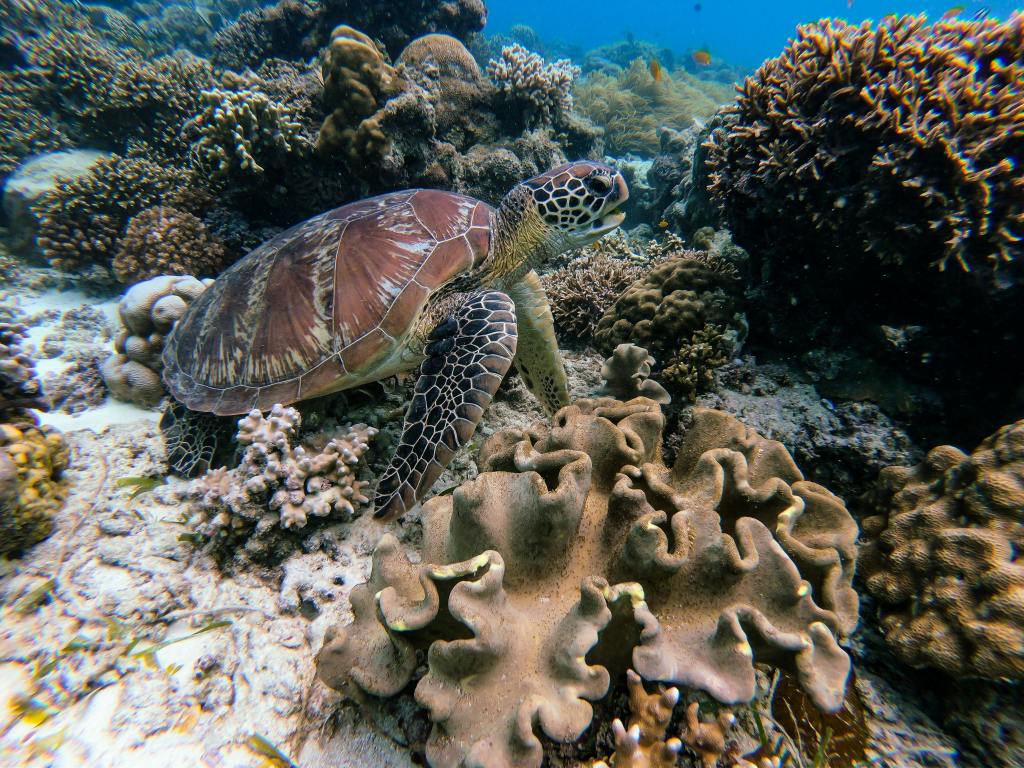
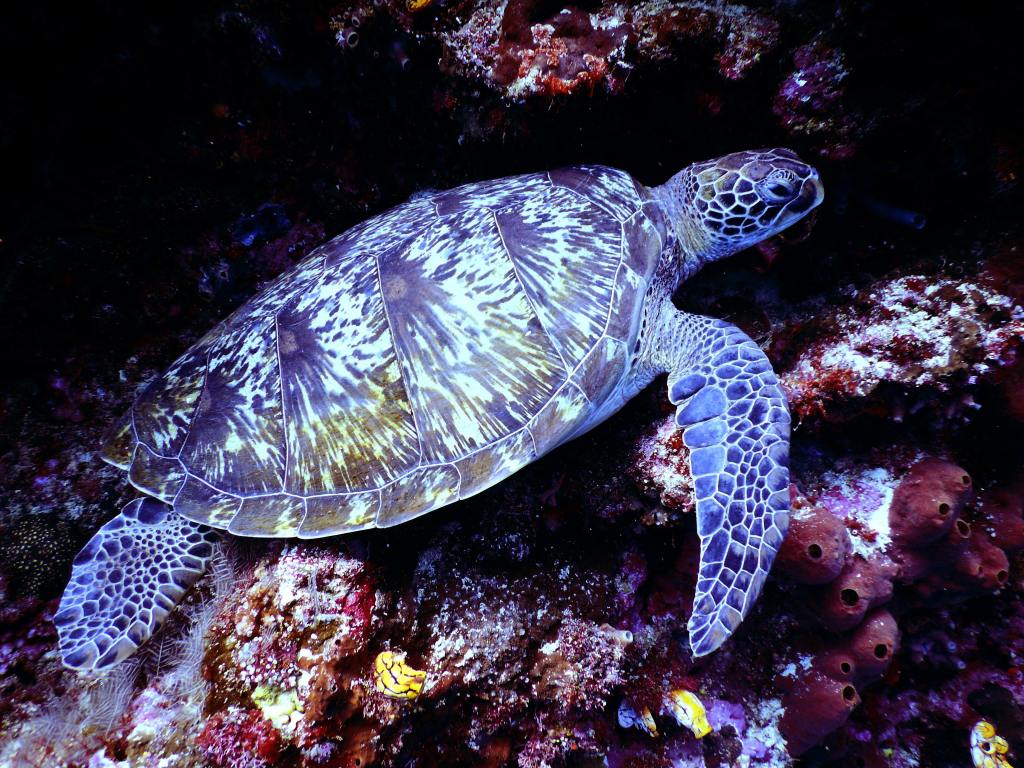
The Hawksbill Sea Turtle (Eretmochelys imbricata) has glided through the oceans for millions of years, a living witness to the slow unfolding of Earth’s natural history. With its sharp beak and beautifully patterned shell, it has survived ice ages, shifting continents, and countless changes in climate. And yet, in just a few centuries of human exploitation, this ancient survivor has been pushed to the brink of extinction. Found today in the warm waters of the Red Sea and Arabian Gulf, the Hawksbill is listed as critically endangered — a sign not only of its fragility, but of the fragility of our own future.
The threats it faces are painfully familiar: centuries of hunting for its shell, now replaced by illegal trade; nesting beaches lost to coastal development; oceans choked with plastic bags mistaken for food; and fishing practices that ensnare and drown countless turtles. On top of this, climate change warms the seas and destroys coral reefs, robbing the Hawksbill of the feeding grounds it depends upon. What emerges from this picture is not only a tragedy for a species, but a stark mirror of humanity’s reckless relationship with the natural world.
Yet the Hawksbill is not just a victim — it is a key to understanding what is at stake for all life, including our own. These turtles play a vital ecological role, eating sponges that would otherwise smother corals. Healthy coral reefs, in turn, provide homes for fish, protect coastlines, and sustain millions of human communities with food and livelihoods. If the Hawksbill disappears, reefs weaken, biodiversity collapses, and the oceans grow emptier. The fate of the turtle is, in a very real sense, bound up with the fate of humanity.
Protecting this species, then, is not simply about saving a turtle. It is about affirming a vision of the future where humans live in balance with creation, rather than in conquest of it. Each conservation effort — from banning trade to reducing plastic waste, from guarding nesting beaches to fighting climate change — is a declaration of responsibility to generations yet unborn. The survival of the Hawksbill is a sign of hope, proof that humanity can choose stewardship over destruction.
Our world today stands at a crossroads. If we allow ancient creatures like the Hawksbill to vanish, we are not only erasing irreplaceable beauty but undermining the very systems that sustain human life. But if we rise to the challenge, we affirm that the future of humanity is not one of loss and decline, but of renewal and harmony. To fight for the Hawksbill is to fight for the oceans. To fight for the oceans is to fight for the future of our children, and for the enduring survival of our world.
 Agrarian Prosperity Committee